How KC Waterproofing Lifts Sunken Concrete
Kansas City’s clay-heavy soils expand when wet and shrink when dry, and that seasonal movement leaves voids under concrete over time. Driveways develop lips at the garage. Sidewalk panels sink at one corner and catch your foot. Patio slabs tilt back toward the house instead of draining away from it. Front steps pull away from the porch and the gap gets a little wider each year.
KC Waterproofing and Foundation Repair has been leveling and lifting settled concrete for Kansas City homeowners since 1985. Using a polyurethane foam product called PolyLift, their crews raise sunken slabs back toward their original position without tearing out and replacing the concrete.
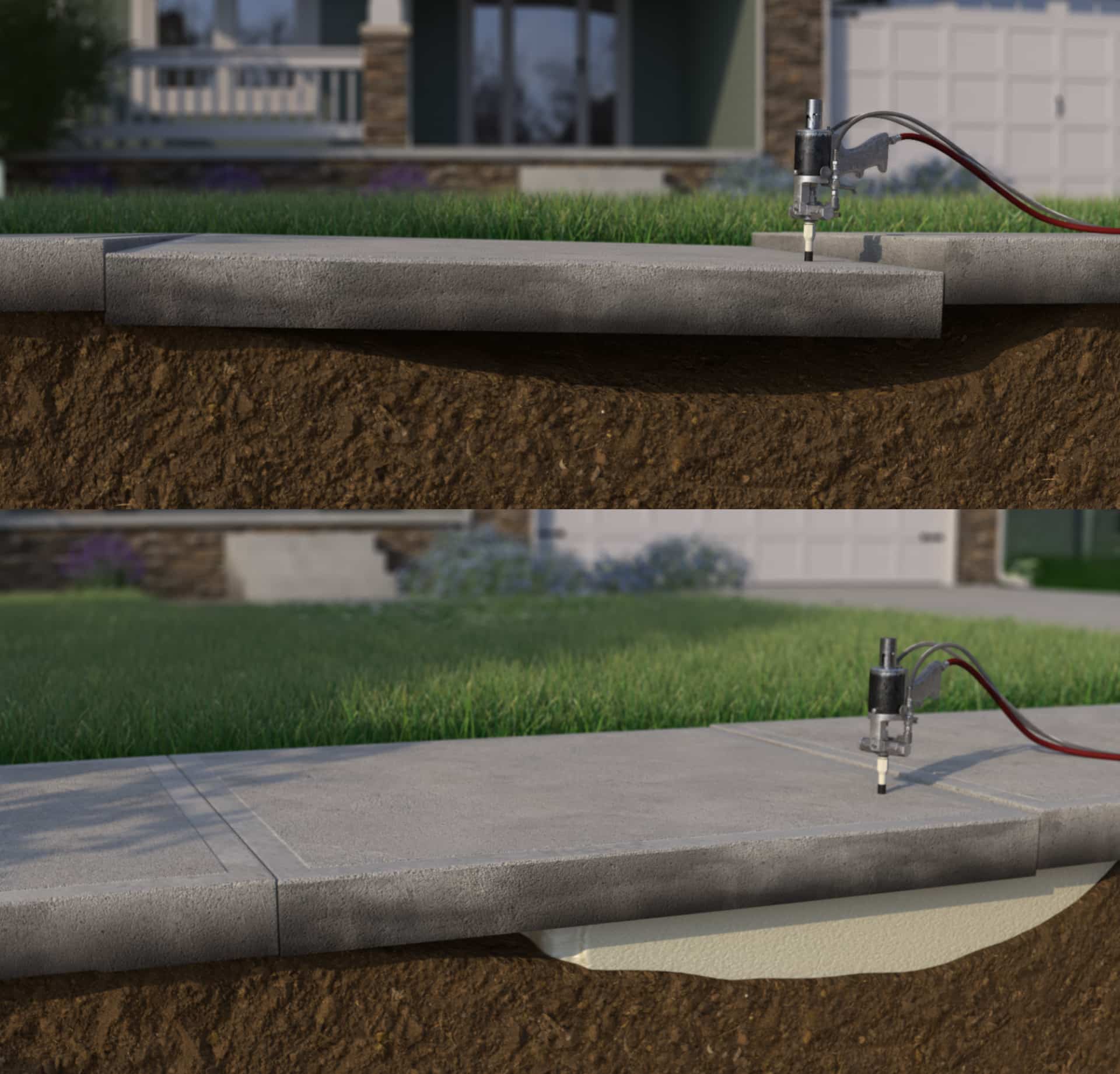
A Concrete leveling Project in Action
Why Does Concrete Settle in Kansas City?
The soil under Kansas City is largely clay, and clay is reactive. It takes on water and swells, then dries out and shrinks. That repeated cycle creates movement under slabs that weren’t designed to flex with it. Over time, gaps open up between the soil and the underside of the concrete, and the slab drops into them.
A few specific conditions accelerate that process:
- Downspout and drainage issues. Water discharging close to the foundation or running along the edge of a driveway saturates the soil in a concentrated area. As that soil erodes or compresses, the concrete above it loses support.
- Poor initial compaction. If the soil beneath a slab wasn’t properly compacted during construction, the weight of the concrete gradually pushes it down over the years.
- Freeze-thaw movement. Kansas City winters push frost into the ground, heaving soil upward and then releasing it on the thaw. That repeated lifting and dropping works at the contact between soil and slab until the fit is no longer tight.
The slab itself is usually structurally sound. The problem is what’s no longer underneath it.
How PolyLift Concrete Lifting Works
PolyLift is a polyurethane expanding foam that KC Waterproofing injects beneath settled concrete slabs to fill voids and raise the surface back toward its original position. It’s an alternative to mudjacking that uses a lighter material, so the added weight under the slab doesn’t compound the settling problem the way heavier fill can.
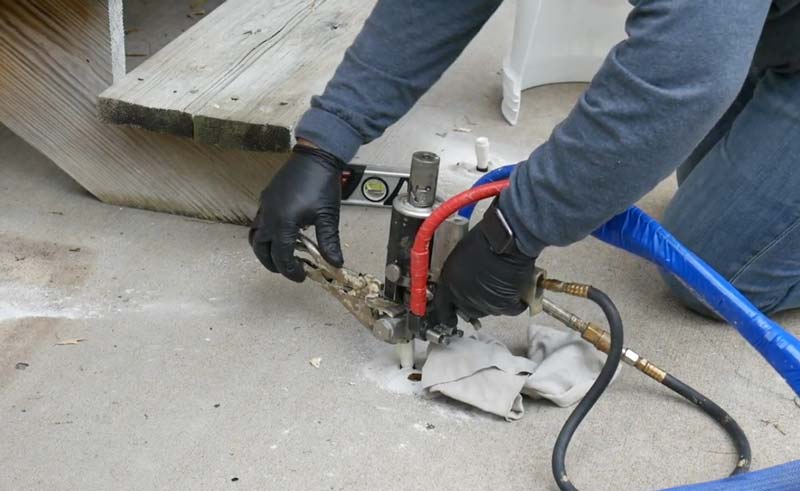
The process is straightforward. Small holes are drilled through the concrete at strategic points above the void. PolyLift is injected through those holes, expands to fill the empty space beneath the slab, and hardens quickly. The concrete rises as the foam sets. Once the slab is back at the right level, the holes are patched and the area is ready to use.
The whole process is significantly faster than replacement. There’s no curing time for new concrete, no heavy equipment tearing up the surrounding area, and no waiting days before you can use the driveway or walk again.
One thing worth noting: PolyLift levels and lifts settled concrete. It isn’t a crack repair service. If a slab has structural cracking that goes beyond settling, KC Waterproofing will be straightforward about whether lifting is the right solution for your situation.
Call our Concrete Lifting and PolyLift experts today at 816 505 9990 or Get a free estimate.
Where Concrete Leveling Is Used
PolyLift works on most exterior concrete surfaces around a Kansas City home where settling has created an uneven or hazardous surface. Common applications include:
- Driveways. Settled panels along the garage create a lip that you feel every time you pull in and that channels water toward the foundation instead of away from it.
- Sidewalks and walkways. A panel that has dropped even an inch relative to the next one becomes a trip hazard for anyone using the walk, including visitors, kids, and delivery drivers.
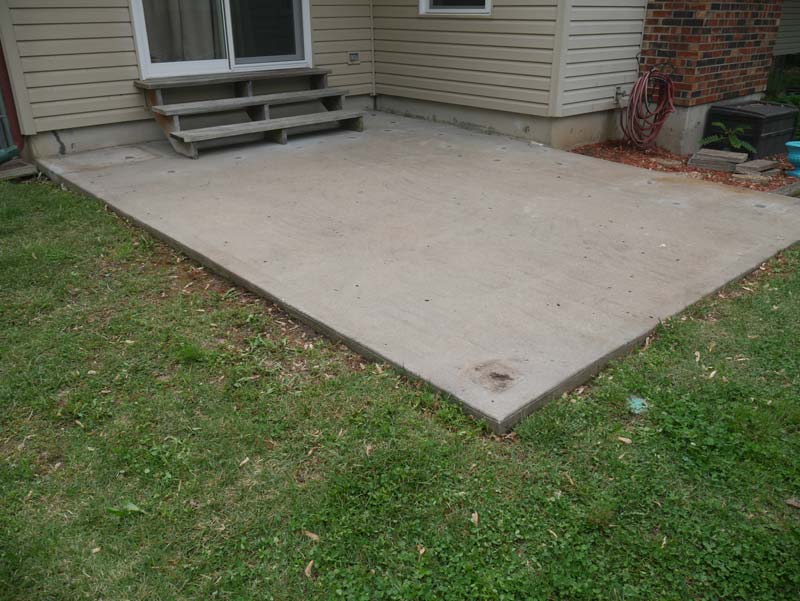
- Patios. Slabs that have tilted back toward the house direct water against the foundation wall. Lifting them restores proper drainage slope.
- Front steps and stoops. Steps that have pulled away from the porch or settled on one side create both a safety issue and an entry point for water.
- Garage floors. Interior slabs that have settled unevenly affect how the space drains and can create problems for anything stored or parked on them.
If you’re not sure whether lifting is the right approach for your specific slab, KC Waterproofing can assess it and tell you honestly what they can and can’t do.
Interior Slab Leveling in Kansas City
Settling isn’t limited to concrete outside the house. Garage floors, basement floors, and interior slabs can develop low spots and uneven surfaces over time for the same reasons exterior concrete does. Voids open up under the slab, support becomes uneven, and the surface reflects that with dips, slopes, or sections that no longer sit flush with the rest of the floor.
KC Waterproofing uses PolyLift for interior slab leveling using the same process as exterior work. Small holes are drilled through the slab, foam is injected to fill the void and raise the concrete, and the holes are patched once the slab is back at the correct level. Because PolyLift sets quickly and doesn’t require excavation, the disruption to the space is minimal and the area is usable again shortly after the work is done.
Steps to Concrete Leveling
-
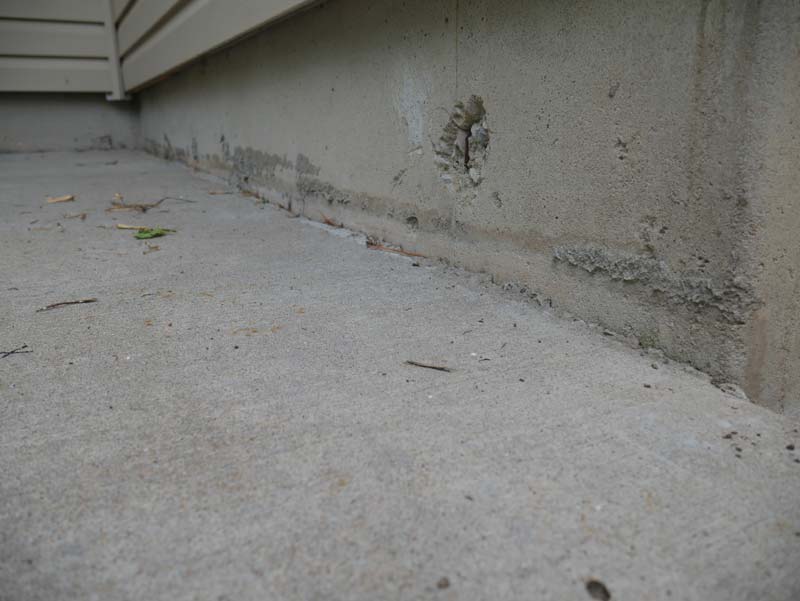
- Before Photo
-
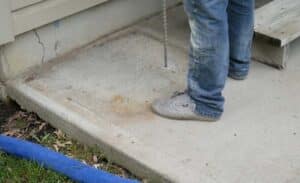
- 5/8′ Hole Drilled
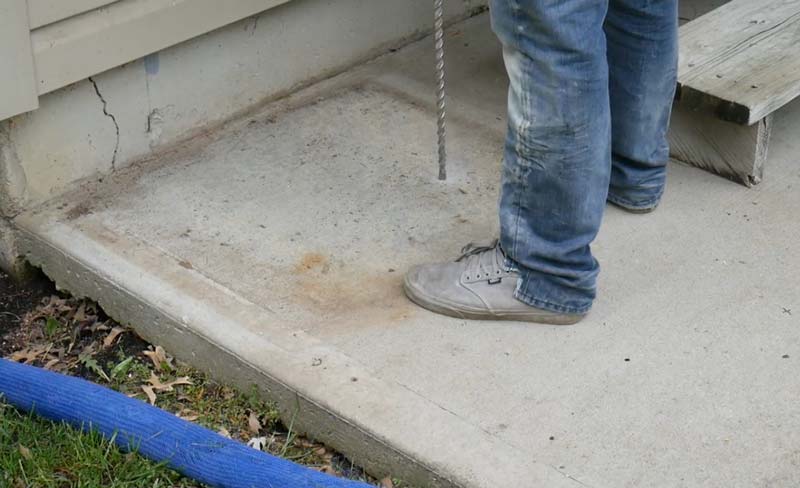
-
- Polyurethane Foam Injected
-
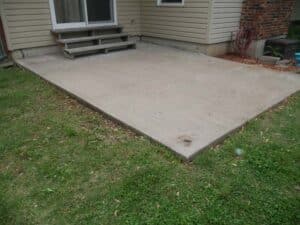
- Job Completed
Schedule Your Free Concrete Leveling Estimate in Kansas City
If you have a settled driveway, sidewalk, patio, steps, or interior slab around your Kansas City home, KC Waterproofing can assess it and tell you whether PolyLift lifting is the right fix. The company has been serving Kansas City homeowners since 1985 and backs its work with a lifetime transferable warranty.
Schedule a consultation to get a free estimate.
Concrete Leveling FAQs in Kansas City
How do I know if I need concrete leveling instead of replacement?
Look at whether the slab itself is intact. A driveway with a lip at the garage, a sidewalk panel sitting lower than the one next to it, or a patio that now tilts back toward the house are all signs of settling, not damage to the concrete. If the surface is cracked or crumbling beyond that unevenness, replacement is usually the better call. KC Waterproofing can look at the slab and tell you honestly which category it falls into before you commit to either option.
Can concrete leveling fix a cracked driveway or sidewalk?
PolyLift raises and levels a slab that has settled, but it doesn’t repair the crack itself. If a driveway or sidewalk has structural cracking beyond normal settling, lifting it won’t solve that part of the problem. KC Waterproofing will walk you through whether leveling addresses what you’re seeing or whether the slab needs a different kind of repair first.
Will the concrete settle again after leveling?
It depends on what caused the settling in the first place. A slab that sank because of a downspout draining next to the foundation is more likely to hold if that water gets redirected. Kansas City’s clay soil will keep expanding and contracting with the seasons regardless, which is part of why the freeze-thaw cycle and drainage around a slab matter as much as the leveling work itself.
Does concrete leveling work on interior slabs like garage or basement floors?
Yes. KC Waterproofing uses the same PolyLift process on interior slabs as it does outside: small holes drilled through the concrete, foam injected to fill the void, and the surface patched once it’s level again. Because there’s no excavation involved, a garage or basement floor is usually back in use shortly after the work is finished.